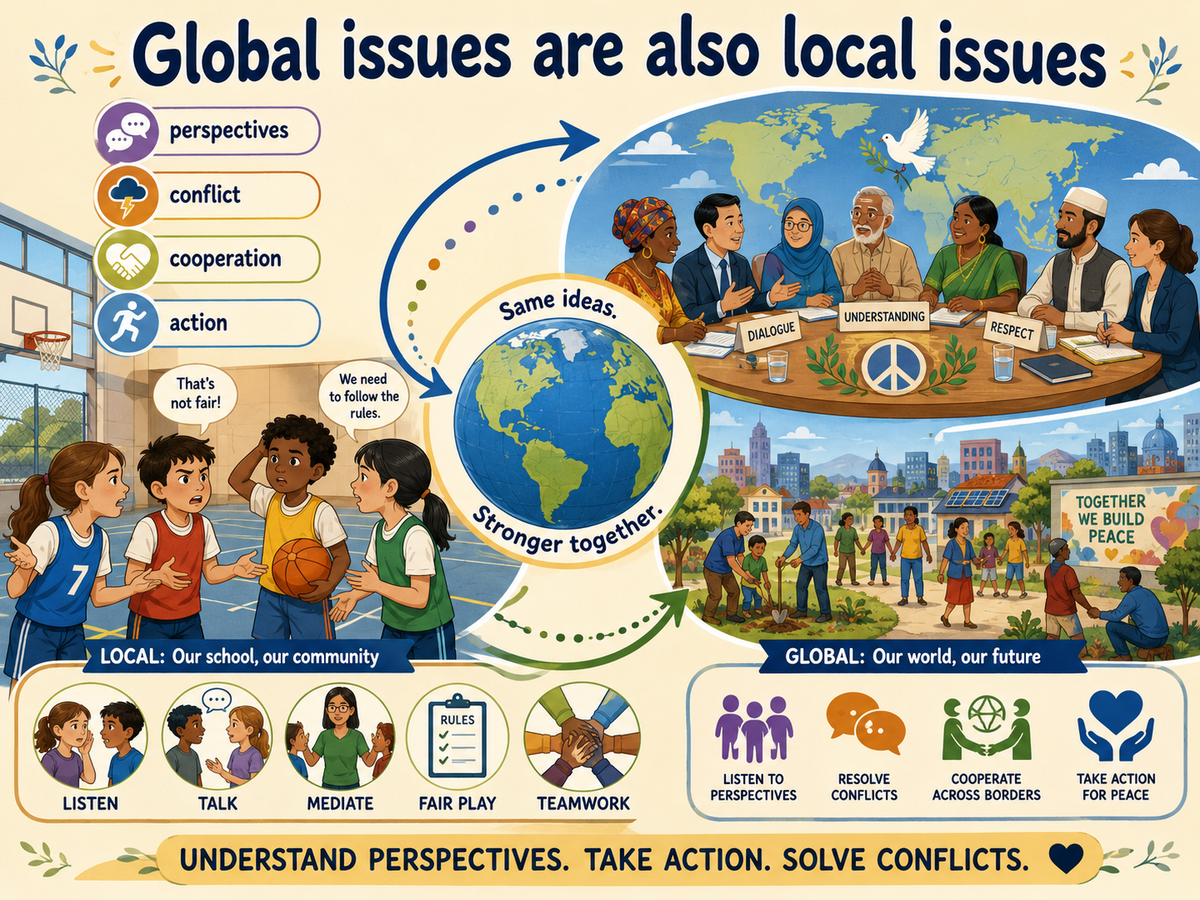
“Global issues are also local issues.” (OECD, Global competence framework)
PISA is the international assessment programme that compares what 15-year-olds can do in different countries. In 2018, the OECD added global competence as an area of focus.
In simple terms, the framework says students should learn to do four things:
- Understand important local and global issues
For example, conflict, migration, inequality, climate change, discrimination or access to resources. - Understand different perspectives
Students should be able to ask:
How might another person see this differently from me, and why? - Interact constructively with people who are different from them
This includes communication, empathy, cooperation and conflict resolution. - Take responsible action
Students should consider what they can actually do to improve a situation, rather than only studying it.
There can't be better hook when Grade 5 in my school start the school year with a unit about Peace and Conflicts!
For this unit, PE is integrating to this unit to hopefully shed so trandisciplinary light 😼
Two of the pillars of the IB PYP programme are developing conceptual understanding and explore local and global context so students build authentic connections between their own experience and bigger issues.
To deepen the students' understanding of the central idea ("Understanding different perspectives helps people solve conflicts and bring peace"), I have been using the same conflict cycle that my colleagues homeroom teachers are using in their classroom.
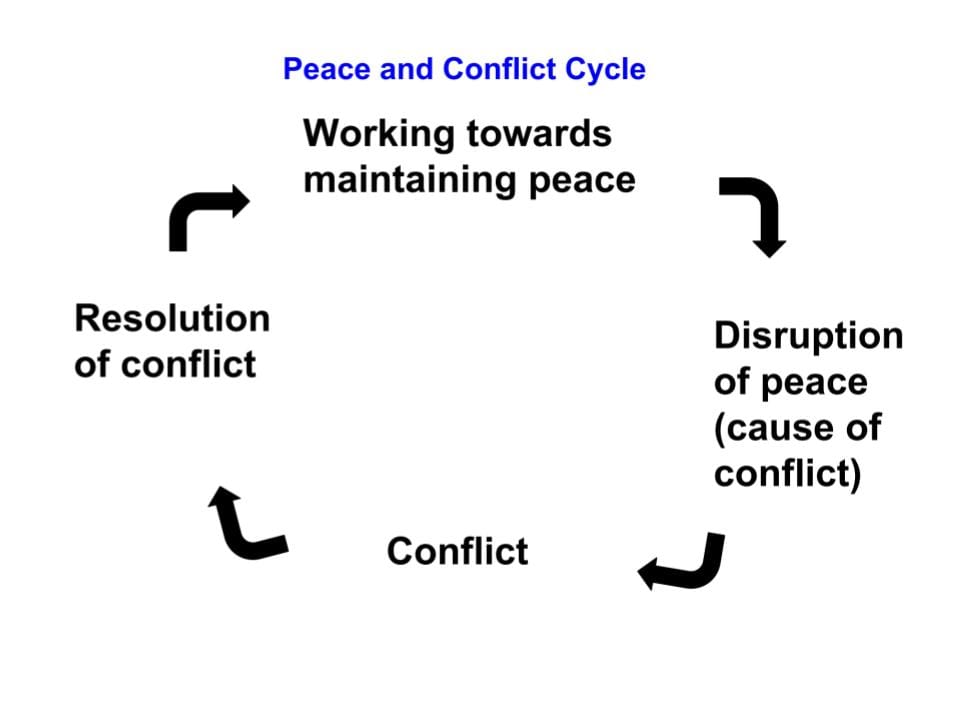
As we began our inquiry from the PE lens, we have been establishing with the students that different types of conflicts can occur when we play games in PE.
- A disagreement
- A dispute
- A conflict
From there, before starting the activities we brainstorm about the kind of potential conflicts that might arise.
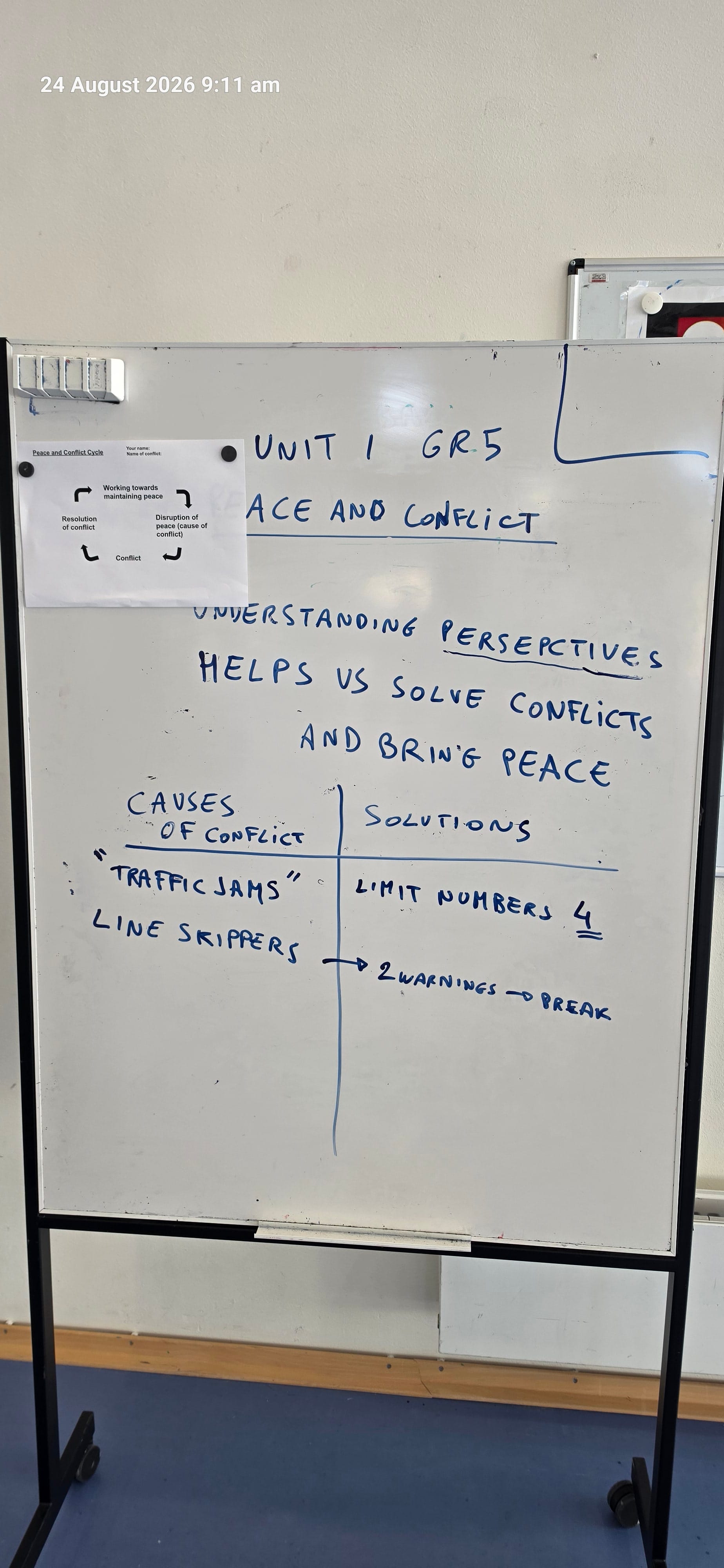
For that instance, when I gave my students a taster in gymnastics, they raised two potential issues.
- Traffic jams on the stations for which their solution was to limit the number of people to 4 at a time. Their task was to inform their peers when the station was free.
- People skipping the line. Their solution, more direct, was that i would give them 2 warnings before giving them a break.
What I find powerful in my profession as an educator is to really design the learning space with my students and give them the keys to make the gym theirs.
What I find even more powerful is conceptual learning. In my PE classes, my grade 5 don't learn about wars. They learn that misunderstanding someone's perspective can get to awkward situations (disagreement) that can get a little more serious (disputing a point in a net sport game) and sometime escalate to conflicts.
That's where comes in the second part of our thinking process. Once we have identified a conflict, what do we do about it?
The IB inquiry process revolves around Inquiry-Reflection-Action
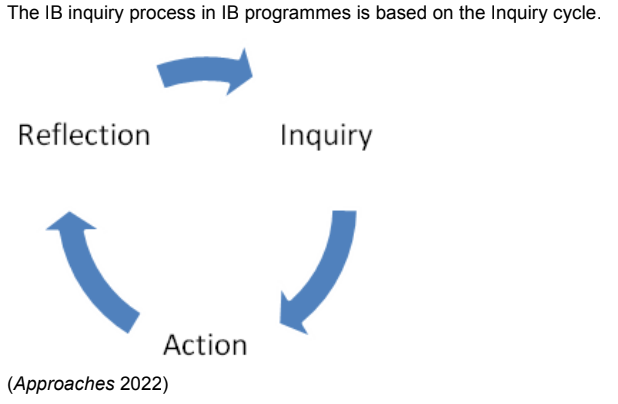
That's the action part that interests me here. Once we have established with the students the different types of conflicts, I encourage them to take action.
In one of the first lessons of the unit, we looked at people's preferences when playing. In an open inquiry, people can play by themselves, or play rallyes, or play competitive matches. The tricky part is what to do when students with different preferences get together even if they have different expectations about how the game will be played.
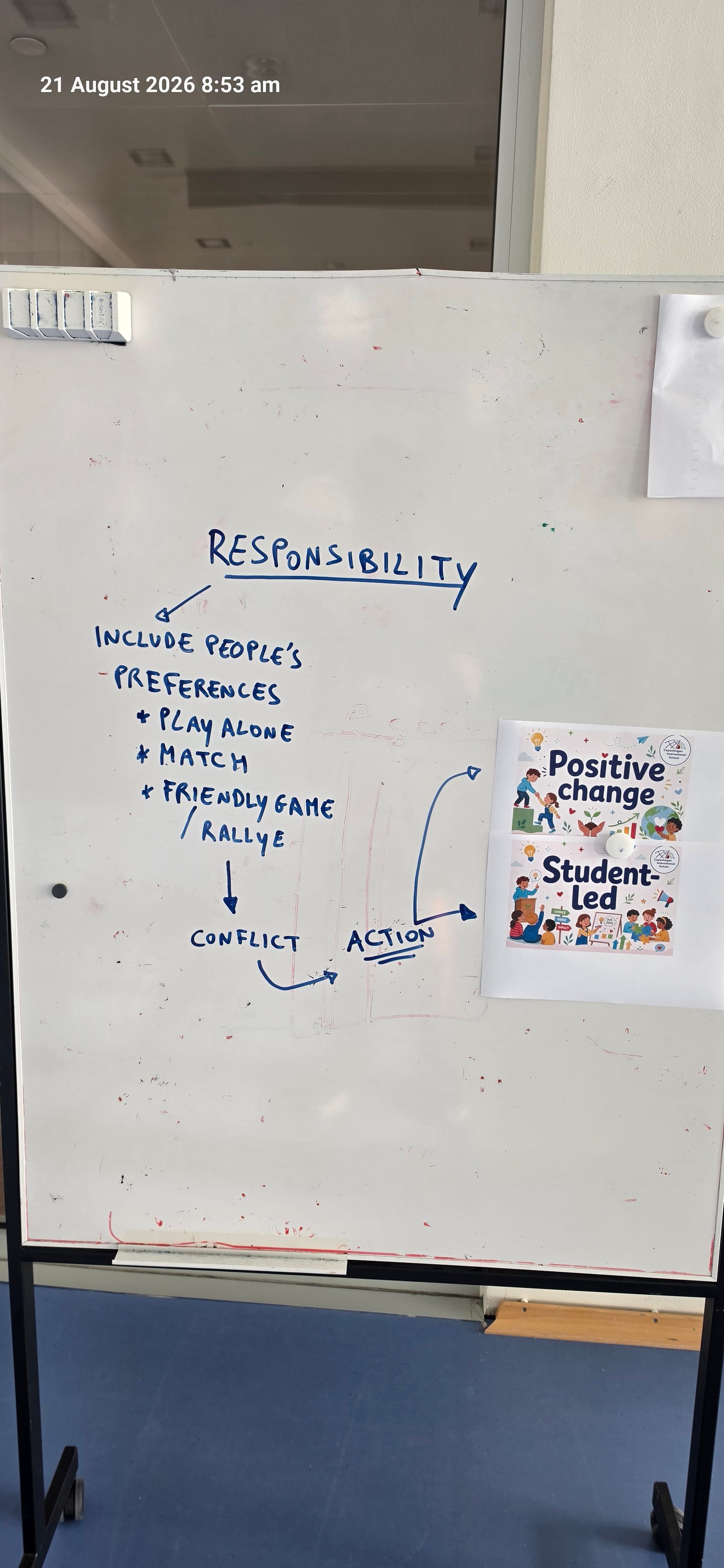
The task for my students was simple: engage in a game of your choice with students you connect with and if you struggle to play in a way that includes everyone, find a solution that doesn't involve me as a mediator.
Some of the solutions they found were:
- Divide the volley ball game into a friendly and a competitive part
- Play a football game everyone vs everyone and the person who scores becomes the keeper.
Mind you, things don't always work out this way and there is a long way before making this process systematic. This is where transdisciplinary learning is powerful, with its ability to plant seeds throughout the different learning spaces with the hope that somewhere along the way, students will make the connections between the different contexts of learning.
For this to happen, students need a framework that speaks to them in a language they can hear.
At this end of the PE lessons for this unit, as a thinking routine, I ask my students if someone, who entered the gym to take a snapshot of the learning, would see peace keepers, conflict solvers or arguments in full swing—and how they would describe it.
The work is still in progress 😺
Biblio.
PISA 2018 Assessment and Analytical Framework: Global Competence Framework (page 166-217)