All systems go

I always see transdisciplinary learning like the A-team putting a plan together. To reach students' conceptual understanding, educators recruit the best specific knowledge and skills of the different subjects and disciplines.
Embracing a transdisciplinary approach contains a certain form of acceptance. By designing learning engagements, educators accept that they might not see the results themselves right away and that learning is a work in progress. They plant the seeds and the disciplines and subjects will provide the photosynthesis. The rest comes down to the students, who access learning at their own pace and developmental stages.
Conceptual understanding is the acquisition of a cognitively deeper knowledge drawn from experience, emotions and connections between diverse situations. When the brain repeatedly experiences or practices something, neurons activate together, strengthening connections and forming new networks. This ability of the brain to change its connections and organisation is called neuroplasticity.
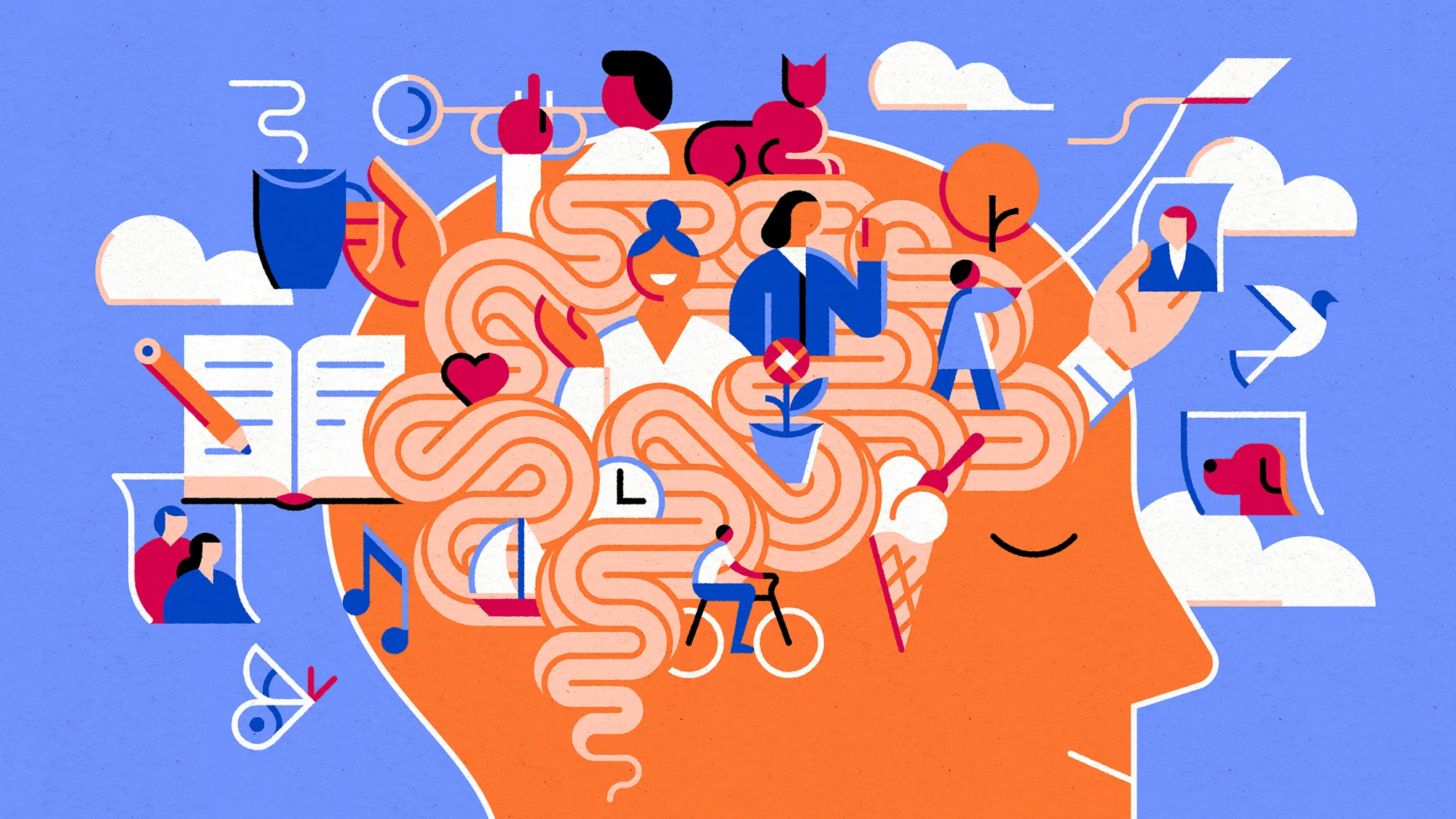
Piaget already stated an eternity ago: “Concepts are abstract systems of classification that allow the individual to organise experience.” (1970)
Students need to make meaning of what they learn. That's where the importance of language comes in. By building a common language between the disciplines, educators build common understanding. Language is what solidifies the learning. It helps the brain categorise learning experiences by labelling them.
When working together with a transdisciplinary approach, educators draw the bridges between subjects through language, which will establish for the students concrete anchors to abstracts concepts.

In a recent collaborative unit with Grade 1 in my school, students were inquiring about how Systems can be used to meet the needs of the people in a community.
They looked at concepts like form and causation and one of the lines of inquiry was: How are our needs and systems connected. Those were the anchors that I used to draw the knowledge and skills from my learning engagements in gymnastics to get to the central idea.
My focus was all along to build a common language shared with my fellow homeroom teachers. Students would come to PE and we would have conversations of the form of different gymnastics skills or human pyramids. We would talk about the impact of the run-up on a vaulting skills or the role of the head in gymnastics, two examples of what causation is.
We also established that our gymnastics class needed systems to organise the learning and safety too: we had waiting lines on the stations, 30-second turns on the rings, a booklet of skills to browse through, rotations on the equipment every 5 minutes, different vault sizes, etc. All of this offered the perfect venue to dig into the central idea.
Building a common language requires consistency and enough run time to solidify understanding. So themes became recurring throughout the 6 weeks of the units, whether they were talked about or written on the board to guide conversation.
Teaching in an IB school is a treat, so while inquiry helps make connection in the learning, it also opens new roads. The line of inquiry about needs and systems are connected is a perfect example.
Along the way, students reflected that our systems in class could be improved to meet everybody's needs. So we agreed together to make adjustments to our systems.
- Students could adjust the distance of their run up without confusing the next person in line by telling them "I need a longer run-up"
- To avoid stress on the rings, we agreed to only start counting up to 30 once the peer had climbed on the rings.
Those are concrete examples that learning can be easily co-constructed with students. It doesn't have to be complicated.
Those situations are exactly what we are looking for in a transdisciplinary approach. By developing a common language and making connections, my gymnastics learning engagements were drawing on the knowledge and skills in PE that were best suited to understand the central idea of the transdisciplinary unit.
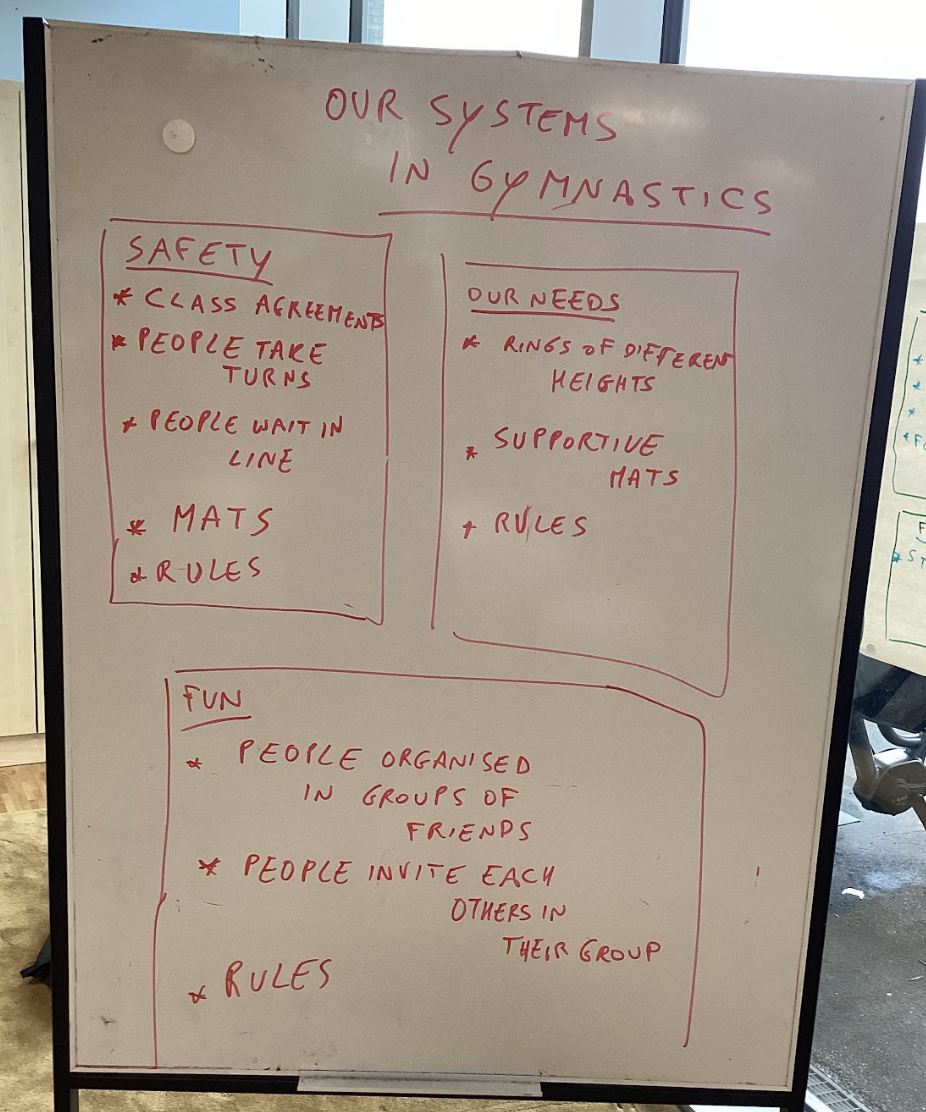
As a reflection on our learning at the end of the 6 weeks, we brainstormed with the students about what systems we had in place in gymnastics and how they met their needs, ensured they were safe and allowed them to have fun.
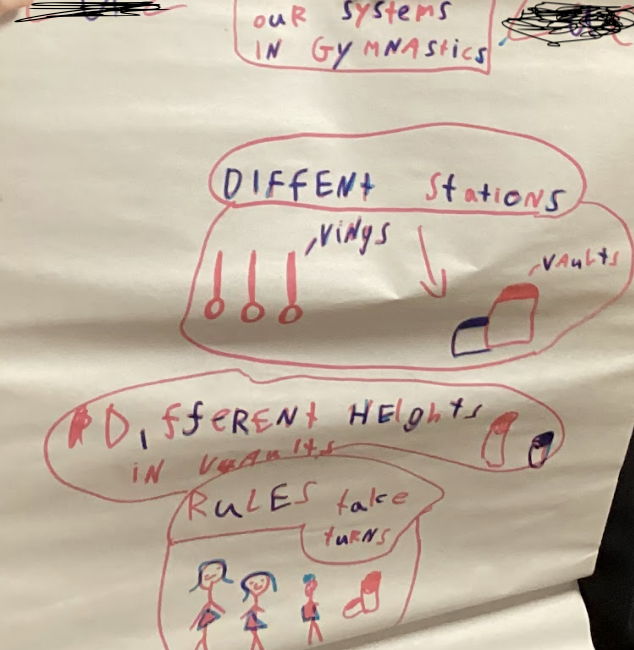
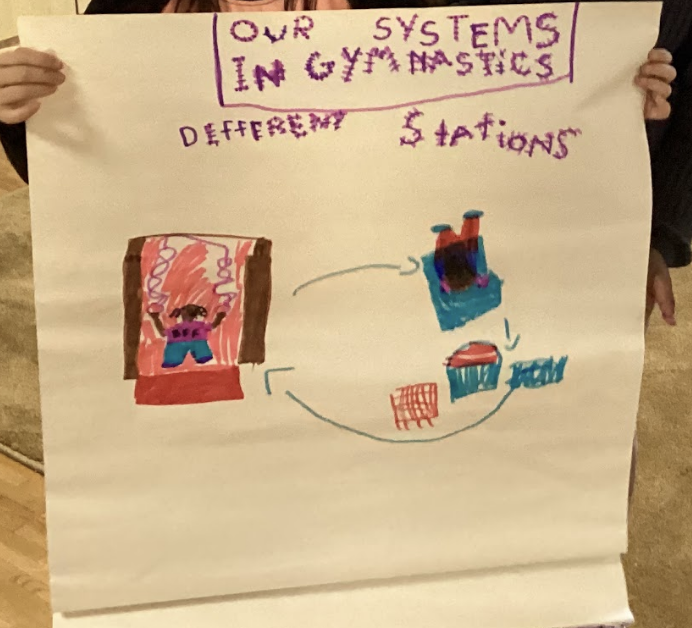
Gymnastics wasn't the end goal but the vehicle to convey bigger ideas :)